
Artificial Intelligence (AI) has emerged as one of the most transformative innovations of our time. From self-driving cars to intelligent virtual assistants, AI is revolutionizing how we live, work, and interact. But behind many of AI’s most powerful applications lies a crucial component: Machine Learning (ML). Understanding the role of Machine Learning in the world of AI is essential to grasp how these intelligent systems operate, learn, and evolve.
What Is Artificial Intelligence?
Artificial Intelligence refers to the simulation of human intelligence by machines. These systems are designed to perform tasks that typically require human intelligence, such as understanding language, recognizing images, solving problems, learning from experience, and making decisions. AI is a broad concept that includes many subfields, including natural language processing (NLP), robotics, computer vision, and most notably, machine learning.
What Is Machine Learning?
Machine Learning is a subset of AI that focuses on enabling machines to learn from data, identify patterns, and make decisions with minimal human intervention. Instead of being explicitly programmed for every task, ML algorithms are trained using large datasets. These algorithms improve over time as they are exposed to more information.
In simpler terms, while AI is the overall concept of creating intelligent machines, ML is the method or technique that gives these machines the ability to learn and adapt.
The Relationship Between AI and Machine Learning
To understand how ML fits into AI, think of AI as the umbrella term, and Machine Learning as a core component under that umbrella. AI is the goal of making machines smart. ML is one of the primary tools used to achieve that goal.
For example:
- When you ask a virtual assistant a question, AI helps interpret your language (via NLP), while ML helps the assistant learn from previous interactions to improve future responses.
- In image recognition, AI enables a system to identify objects, and ML powers the accuracy by training on thousands of image examples.
Without Machine Learning, many modern AI applications would either not exist or would be much less effective.
How Machine Learning Enhances AI Systems
1. Improved Accuracy and Performance
Machine Learning allows AI systems to become more accurate over time. By continuously learning from new data, these systems can refine their outputs and reduce errors. For example, spam filters in email platforms get better at identifying unwanted messages the more they’re used.
2. Automation of Complex Tasks
ML enables automation of tasks that would be difficult or impossible to program manually. From detecting credit card fraud to diagnosing medical conditions, ML models analyze complex patterns in data and make intelligent predictions or decisions.
3. Personalization
Machine Learning powers many of the personalized experiences we encounter daily. Streaming services like Netflix and Spotify use ML to recommend shows or songs based on your preferences. E-commerce platforms suggest products you’re likely to buy, thanks to ML algorithms that analyze your browsing and purchasing habits.
4. Continuous Learning and Adaptation
Unlike traditional software, which remains static unless updated by developers, machine learning systems are dynamic. They learn from new data and evolve, making AI systems more flexible and adaptable to real-world changes.
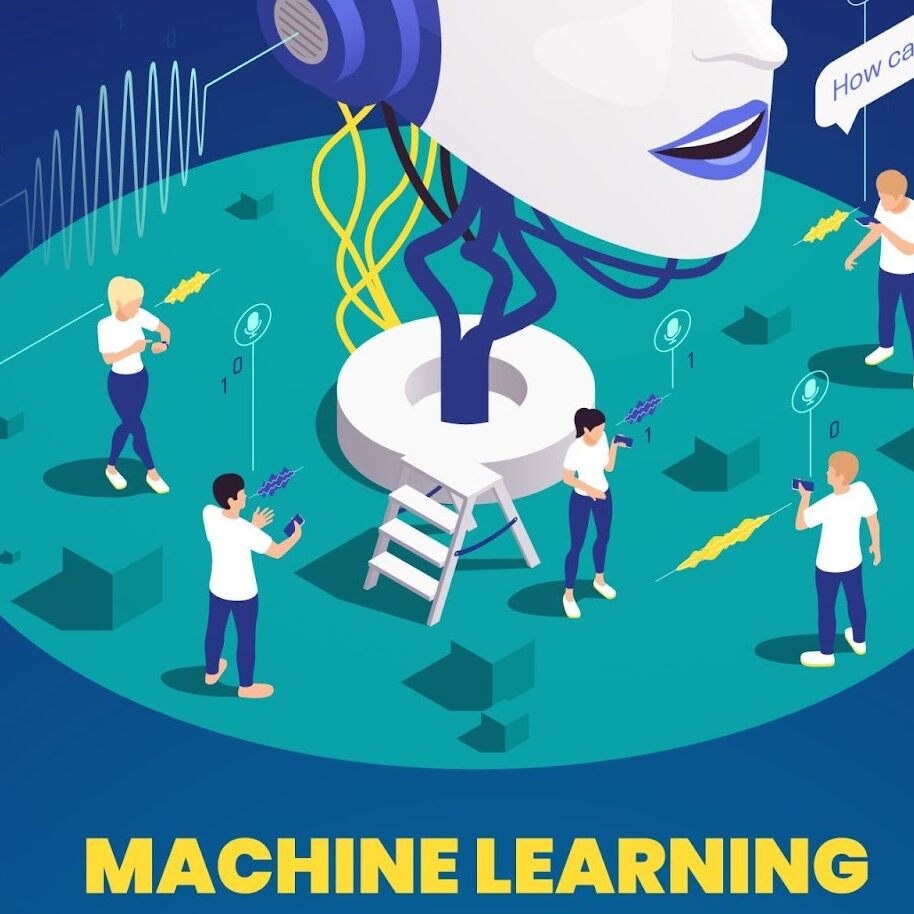
Real-World Applications of ML in AI
1. Voice Assistants
Virtual assistants like Siri, Alexa, and Google Assistant rely on Machine Learning to understand user commands, process language, and improve over time through interactions.
2. Autonomous Vehicles
Self-driving cars use ML to recognize road signs, detect pedestrians, and make decisions on navigation, all based on learning from millions of driving miles and real-time data.
3. Healthcare Diagnostics
ML algorithms help detect diseases such as cancer by analyzing medical images and patient data, often with accuracy comparable to human doctors.
4. Finance and Fraud Detection
Banks use ML in AI systems to detect suspicious activities by identifying anomalies in transaction patterns, helping to prevent fraud and secure customer accounts.
5. Chatbots and Customer Service
AI-powered chatbots use ML to provide faster, more accurate responses by learning from previous customer interactions and feedback.
Types of Machine Learning in AI
Machine Learning comes in several forms, each playing a different role in AI:
- Supervised Learning: The algorithm learns from labeled data (e.g., images tagged as ‘cat’ or ‘dog’) to make predictions.
- Unsupervised Learning: The system finds patterns in data without labels (e.g., grouping similar customers for marketing).
- Reinforcement Learning: The algorithm learns by interacting with an environment, receiving rewards or penalties (e.g., robots learning to walk or play games).
- Deep Learning: A subfield of ML involving neural networks that mimic the human brain, used in advanced tasks like facial recognition and natural language translation.
Challenges and Considerations
While Machine Learning significantly boosts the capabilities of AI, it comes with challenges:
- Data Dependency: ML systems need vast amounts of high-quality data. Poor data leads to poor results.
- Bias and Fairness: If training data is biased, ML models can reinforce those biases, leading to unfair outcomes.
- Transparency: Many ML models, especially deep learning networks, operate as “black boxes,” making it hard to explain how decisions are made.
- Computational Resources: ML requires significant computing power and storage, which can be expensive and energy-intensive.
The Future of AI and Machine Learning
As both AI and ML continue to evolve, their integration will deepen, driving innovations across every industry. We’re moving toward a future where AI systems will become more autonomous, human-like, and capable of learning from minimal data thanks to advancements in machine learning.
Emerging concepts like explainable AI, AI ethics, and federated learning are helping make these technologies more transparent, secure, and inclusive. The collaboration between AI and ML will be central to building intelligent systems that not only solve problems but do so responsibly.
Conclusion
Machine Learning plays an essential role in bringing Artificial Intelligence to life. While AI is the broader vision of creating smart machines, ML provides the learning ability that makes those machines intelligent, adaptive, and useful in the real world. Whether it’s your phone unlocking with your face or a car driving itself down the road, it’s the power of Machine Learning working within AI that’s making it all possible.